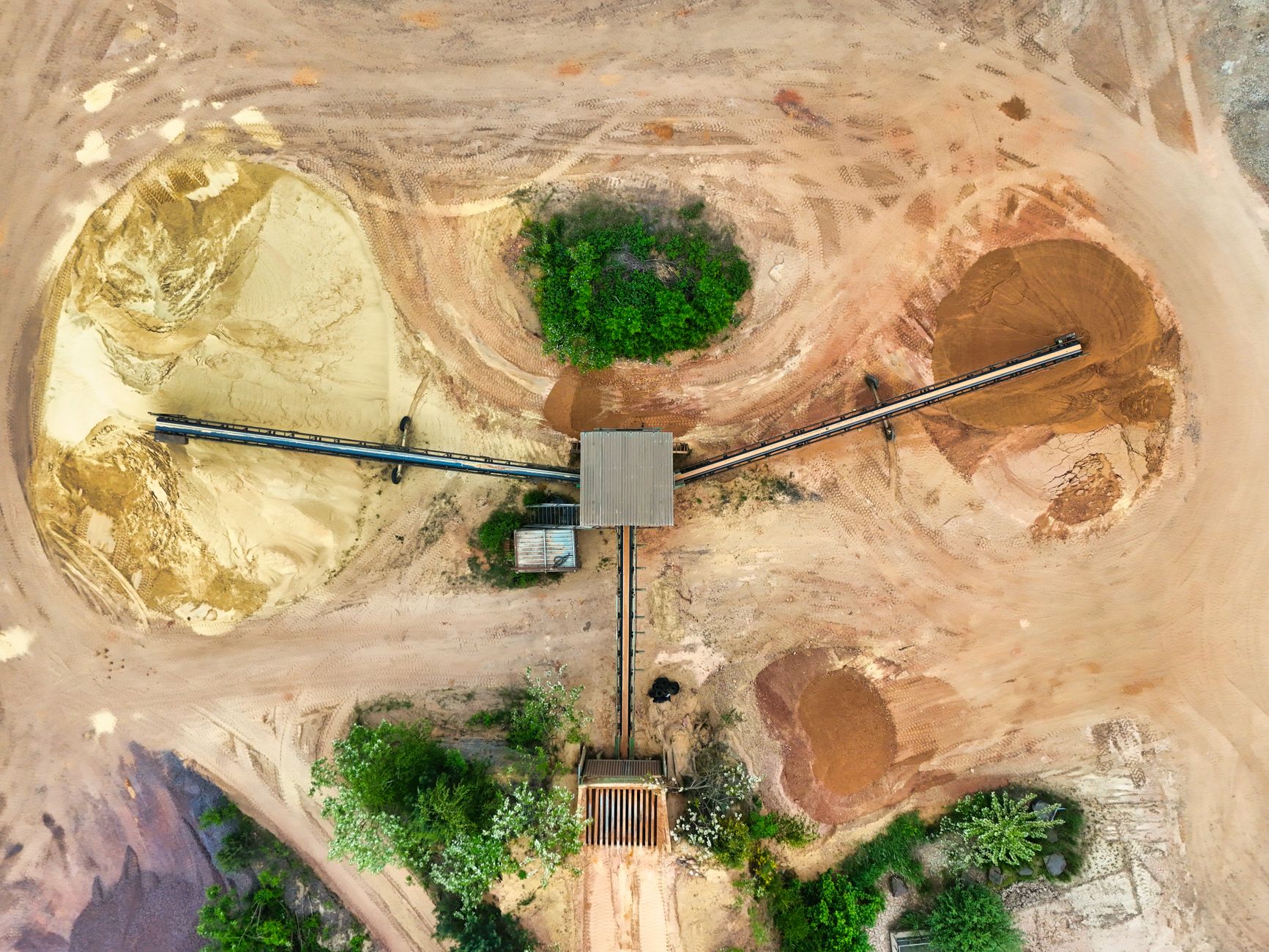
The African Export-Import Bank (EBID) has announced a substantial $266.7 million financing initiative coupled with CFA 30 billion (approximately €45.8 million) in dedicated investment vehicles targeting West African growth corridors. Simultaneously, Malawi's emergence as a rare earth mining hub—backed by a $100 million Australian investment—signals a broader African commodities realignment that European institutional investors cannot ignore.
These developments arrive at a critical juncture for Africa's resource and infrastructure narrative. For European investors, the timing matters: as global supply chains diversify away from concentrated Asian suppliers and geopolitical tensions reshape sourcing strategies, African minerals and West African trade infrastructure represent tangible hedges against commodity volatility.
**The EBID Initiative: Infrastructure as Stability**
EBID's combined $312 million commitment underscores confidence in West African economic resilience despite regional headwinds. The multilateral development bank is channelling capital into sectors that directly benefit cross-border trade—ports, logistics networks, and manufacturing hubs. For European SMEs and mid-market enterprises already operating in Côte d'Ivoire,
Senegal, or
Ghana, this represents easing capital availability for supply chain expansion and local partnership scaling.
The CFA 30 billion tranche deserves particular attention: it signals EBID's commitment to regional currency instruments and franc-denominated financing, reducing hedging costs for European firms operating in WAEMU countries. This is not trivial for exporters managing currency exposure.
**Malawi's Rare Earth Pivot: Supply Chain Reshuffling**
Malawi's $100 million rare earth investment by Australian miner IGO Limited (or comparable operator) reflects a fundamental shift in global mineral supply thinking. Rare earths are non-negotiable for European clean energy and automotive sectors—electric vehicle motors, wind turbine magnets, and
renewable energy infrastructure depend entirely on stable supply chains. China currently controls roughly 60% of global processing capacity, creating geopolitical vulnerability that the European Union explicitly flagged in its 2023 Critical Raw Materials Act.
A functional Malawi rare earth operation diversifies supply away from single-source dependence. Southern African rare earth projects, when operational, typically achieve production costs 15-25% below Chinese averages, creating margin advantages for European manufacturers able to secure offtake agreements.
**Market Implications and Entry Strategy**
The convergence of West African financing expansion and Southern African mineral development creates two distinct investor archetypes:
**Infrastructure-focused investors** should monitor EBID-funded projects in port modernisation, rail corridors, and industrial parks. These assets generate stable, long-duration cash flows attractive to European pension funds and infrastructure specialists.
**Commodities and supply chain investors** should investigate Malawi's rare earth permitting landscape and offtake opportunities. Early engagement with mining operators now yields preferential pricing and strategic partnership terms before projects reach commercial scale.
**The Risk Factor**
Both initiatives carry execution risk. West African infrastructure projects face political transition uncertainty—Malawi itself experienced governance instability until 2023. Due diligence must extend beyond financing announcements to regulatory sustainability and local stakeholder alignment.
For European investors, these developments represent genuine diversification opportunities rather than speculative plays. But entry timing, counterparty selection, and currency hedging require specialist guidance. The window for early-stage positioning in both sectors remains open—but narrows as capital flows accelerate across 2024-2025.
---
Get intelligence like this — free, weekly
AI-analyzed African market trends delivered to your inbox. No account needed.