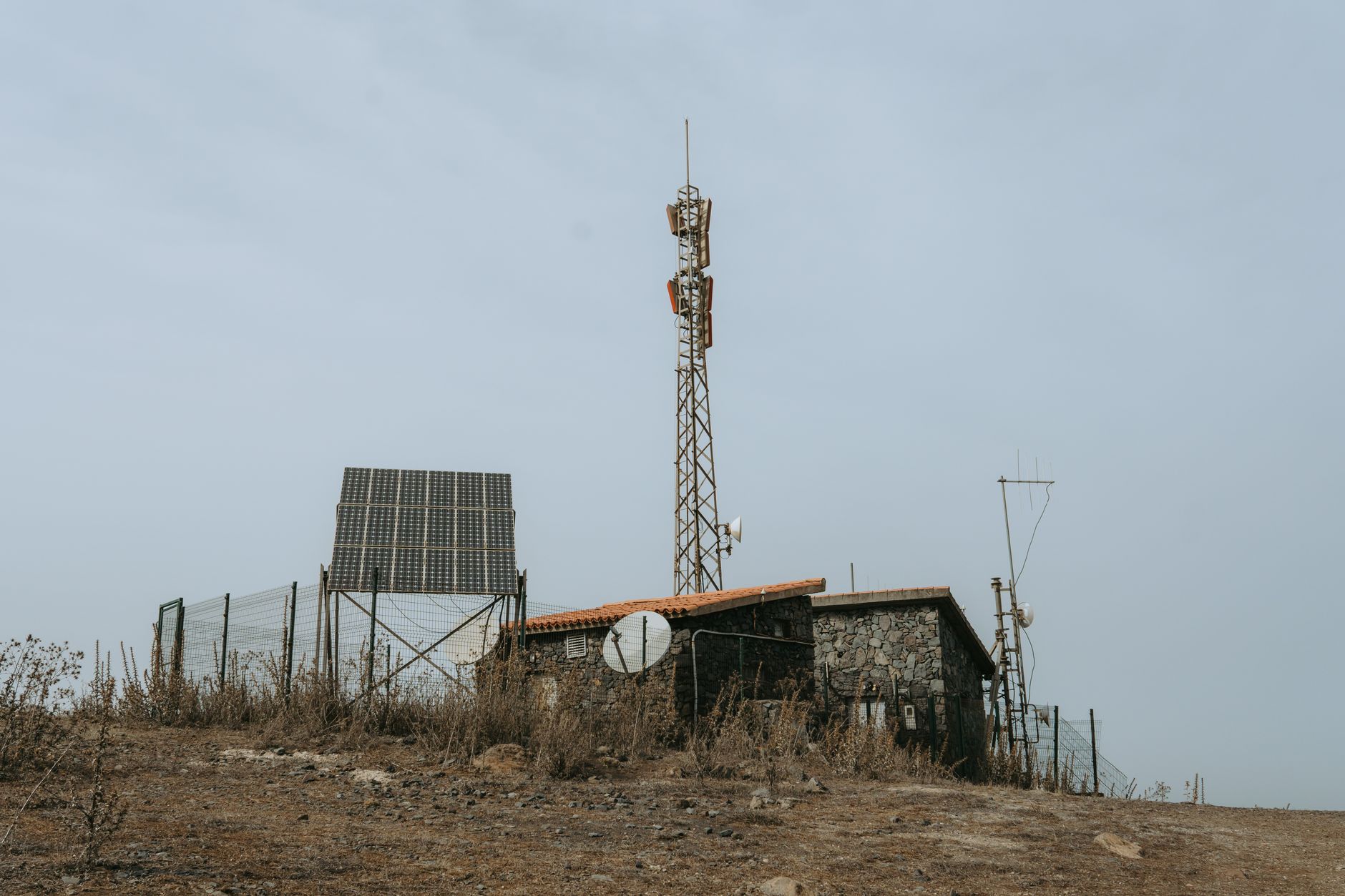
Nigeria's Federal Government has officially transitioned its next-generation satellite infrastructure programme into the execution phase, with the Nigerian Communications Satellite Limited (NIGCOMSAT) confirming launch dates for NIGCOMSAT-2A and 2B in 2028 and 2029 respectively. This strategic advancement represents a critical inflection point for African connectivity and signals mounting institutional commitment to closing the continent's digital infrastructure gap—a reality that should capture the attention of European investors seeking exposure to Africa's technology and telecom sectors.
The satellite initiative addresses a persistent challenge across West Africa: unreliable broadband connectivity, particularly in rural and underserved urban areas. With Nigeria's population exceeding 220 million and internet penetration hovering around 45%, the infrastructure deficit constrains economic productivity, limits e-commerce expansion, and restricts financial inclusion. The dual-satellite deployment will provide high-bandwidth, low-latency connectivity across Nigeria and neighboring regions, fundamentally altering the operational landscape for digital businesses, agricultural tech, healthcare delivery, and financial services—sectors increasingly attractive to European venture capital and institutional investors.
From a macroeconomic perspective, Nigeria's space economy initiative reflects broader pan-African digitalization ambitions. The continent's digital economy is projected to reach $712 billion by 2050, according to IMF estimates, yet infrastructure remains the primary bottleneck. By investing in sovereign satellite capacity, Nigeria positions itself as a regional connectivity hub and reduces dependency on international providers. For European investors, this creates three distinct opportunity vectors: direct infrastructure contracts (telecommunications, ground stations, systems integration), downstream digital services enabled by improved connectivity, and equity stakes in Nigerian telecom and
fintech companies poised to leverage enhanced bandwidth.
The 2028–2029 timeline aligns strategically with Nigeria's National Broadband Plan targets and the continent's Digital Transformation Strategy. NIGCOMSAT's execution phase typically includes procurement, manufacturing partnerships, and launch contracts—traditionally awarded to established aerospace firms, many headquartered in or partnered with European entities. European space technology companies, ground-station operators, and satellite systems integrators should monitor tender announcements through Nigeria's procurement portals and NIGCOMSAT's official channels.
However, risks warrant consideration. First, African satellite projects have historically experienced timeline slippages and budget overruns; the 2028–2029 dates, while optimistic, may shift. Second, regulatory clarity around spectrum allocation and licensing for new satellite operators remains evolving. Third, competition from non-geostationary satellite constellations (Starlink, OneWeb, Amazon's Kuiper) may compress NIGCOMSAT's addressable market, particularly in urban areas. European investors must differentiate between speculative space-tech plays and equity exposure to terrestrial beneficiaries—telecom operators, fintech platforms, and agritech firms that will monetize improved connectivity.
The broader implication: Nigeria's satellite deployment signals Africa's transition from passive consumer of global connectivity infrastructure to active builder of sovereign digital capacity. For European institutional investors, this represents a 3–5 year horizon play, with returns driven not by the satellites themselves but by the ecosystem of businesses that flourish once reliable broadband becomes a utility rather than a luxury.
Get intelligence like this — free, weekly
AI-analyzed African market trends delivered to your inbox. No account needed.